

Agricultural investments have gained significant attention in recent years due to their potential for sustainable growth, food security, and economic development. For students exploring this field, understanding the dynamics of agricultural investments is crucial. This workbook aims to guide students through the complexities of agricultural investments, providing insights into different types of opportunities, risk management strategies, and the future potential of this sector.
Understanding Agricultural Investments
Agricultural investments refer to the allocation of capital into various aspects of the agriculture sector, including crop production, livestock, agribusiness, and related infrastructure. These investments can take many forms, such as direct investments in farmland, agribusiness stocks, mutual funds focused on agriculture, and even newer trends like investing in agricultural technology (AgTech).
Investing in agriculture is unique compared to other sectors due to its direct connection to natural resources, environmental factors, and global food supply chains. Unlike traditional investments, agricultural investments often require a deep understanding of seasonal cycles, climate impact, and commodity markets. This makes the sector both challenging and rewarding, offering opportunities for significant returns if approached with careful research and strategic planning.
For students, gaining a basic understanding of how agricultural markets work, the factors influencing supply and demand, and the types of products that are produced is essential. This foundation will help you make informed decisions about where and how to invest in the agricultural sector.
Types of Agricultural Investment Opportunities
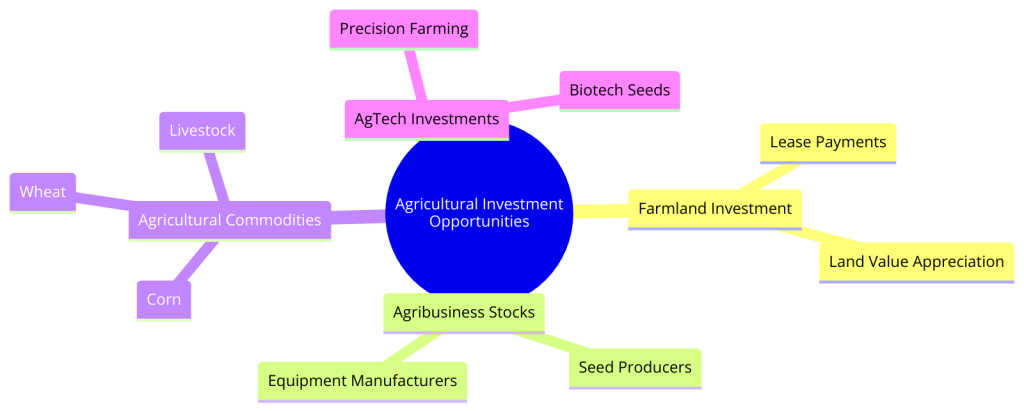
There are several types of agricultural investment opportunities that students should explore:
- Farmland Investment: Purchasing farmland is one of the most direct forms of agricultural investment. Farmland can provide steady income through lease payments and potential appreciation in land value. However, managing farmland requires knowledge of farming practices and market conditions.
- Agribusiness Stocks and Funds: Investing in publicly traded companies involved in agriculture, such as seed producers, equipment manufacturers, and food processing companies, offers exposure to the sector without the need for direct involvement. Mutual funds and ETFs that focus on agriculture provide diversification within the sector.
- Agricultural Commodities: Investing in agricultural commodities like corn, wheat, soybeans, and livestock can be done through futures contracts, ETFs, or commodity-focused mutual funds. This type of investment is often more volatile and requires an understanding of global market trends and weather patterns.
- AgTech Investments: As technology continues to transform agriculture, investing in AgTech companies that develop innovations like precision farming tools, biotech seeds, and sustainable farming practices is becoming increasingly popular. These investments are typically higher risk but offer significant growth potential.
Understanding these different types of investments allows students to assess their risk tolerance and choose opportunities that align with their financial goals and interests.
Assessing Risks and Rewards
Like any investment, agricultural investments come with their own set of risks and rewards. The primary risks in agriculture include market volatility, weather-related disruptions, and changes in government policies. For example, a sudden drought can significantly reduce crop yields, impacting the profitability of farmland investments or agribusinesses reliant on those crops.
On the other hand, the rewards of agricultural investments can be substantial, especially in times of high demand for food products or when commodity prices rise. Agriculture also offers a hedge against inflation, as food prices tend to increase during inflationary periods.
Students should learn to evaluate the risks associated with different types of agricultural investments and develop strategies to mitigate those risks. Diversification across different types of agricultural assets and geographical regions can help reduce the impact of localized events like weather disruptions or policy changes.
The Role of Sustainability in Agricultural Investments
Sustainability is becoming a critical factor in agricultural investments. Investors are increasingly looking for opportunities that not only provide financial returns but also contribute to environmental and social goals. Sustainable agricultural practices, such as organic farming, regenerative agriculture, and the reduction of carbon emissions, are gaining traction.
Investing in companies or projects that prioritize sustainability can also align with broader societal goals, such as reducing food insecurity and combating climate change. Students interested in this area should explore investments in sustainable agriculture, such as organic farmland, companies focusing on reducing food waste, or AgTech firms developing environmentally friendly farming technologies.
Building an Agricultural Investment Portfolio
For students interested in building an agricultural investment portfolio, the key is diversification and informed decision-making. A well-rounded portfolio might include a mix of farmland, agribusiness stocks, commodity investments, and exposure to AgTech.
To start, students should set clear investment goals, whether they are looking for steady income, capital appreciation, or long-term growth. Research is essential, and students should take advantage of resources like agricultural investment newsletters, financial analysis platforms, and market reports from reputable sources.
Moreover, students should consider working with financial advisors who specialize in agricultural investments to help tailor a portfolio that meets their specific goals and risk tolerance.
The Future of Agricultural Investments
The future of agricultural investments looks promising, with increasing global demand for food driven by population growth and changing diets in emerging markets. Additionally, the ongoing development of AgTech and sustainable farming practices offers new opportunities for investors.
However, students should also be aware of the challenges facing the sector, such as climate change, resource scarcity, and geopolitical tensions that could affect global supply chains. Staying informed about these trends and adapting investment strategies accordingly will be crucial for success in agricultural investments.
Conclusion: Embracing Opportunities in Agriculture
Navigating agricultural investment opportunities requires a blend of knowledge, strategy, and adaptability. By understanding the different types of investments, assessing risks, and staying attuned to global trends, students can build a robust investment portfolio that capitalizes on the growth potential of the agriculture sector. As the world continues to grapple with food security and sustainability challenges, agricultural investments offer a unique opportunity to make a positive impact while achieving financial returns.

Dax Cooke is the founder of Farmfolio, a Medellín-based agribusiness and farmland development company. With 10+ years across capital markets and agribusiness, he builds sustainable, cash-flowing farmland projects and export supply chains (coconut, lime, teak, avocado). A three-time NAIFA 40 Under 40 honoree, his career began at Citigroup’s Capital Markets.